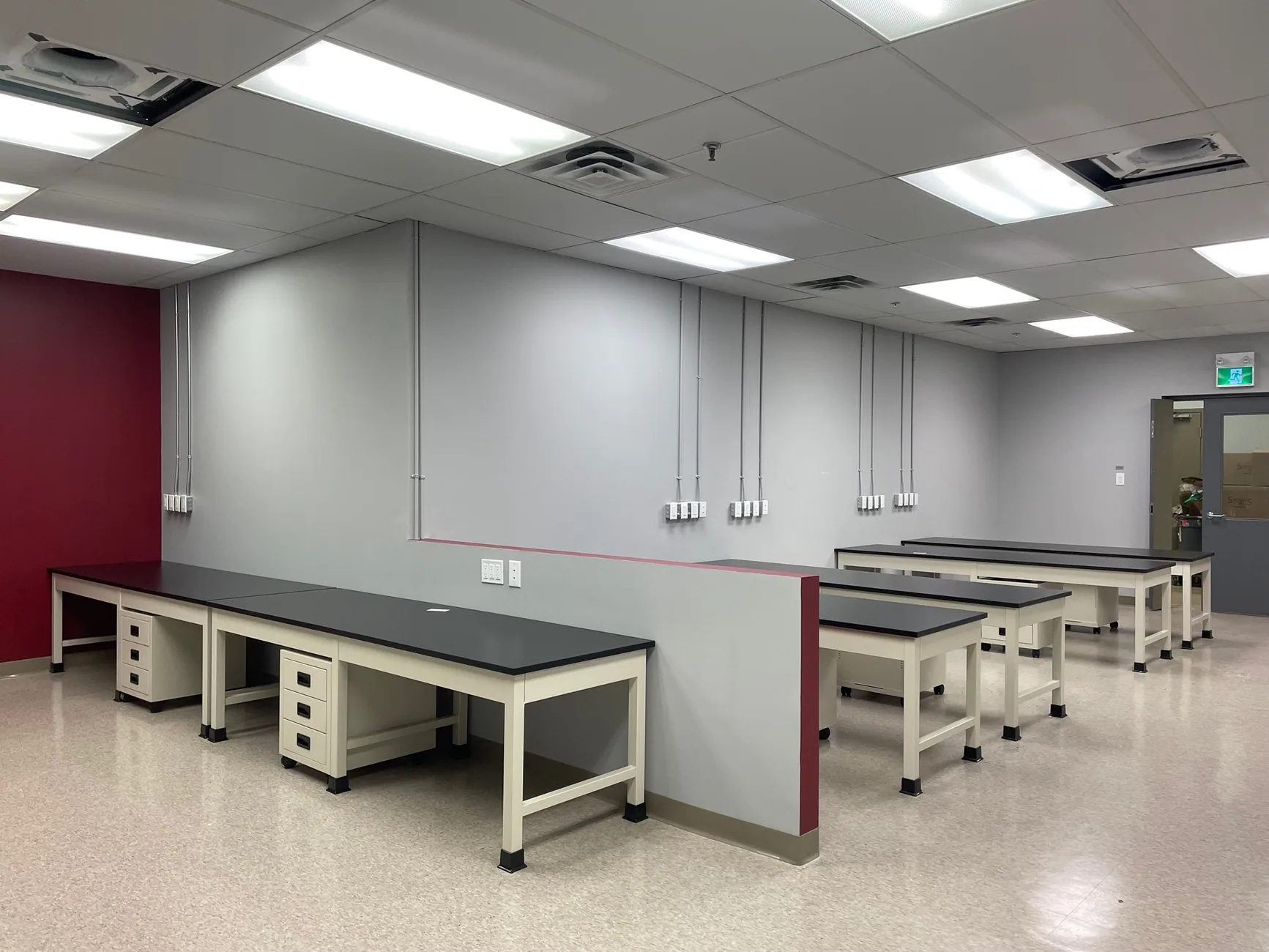
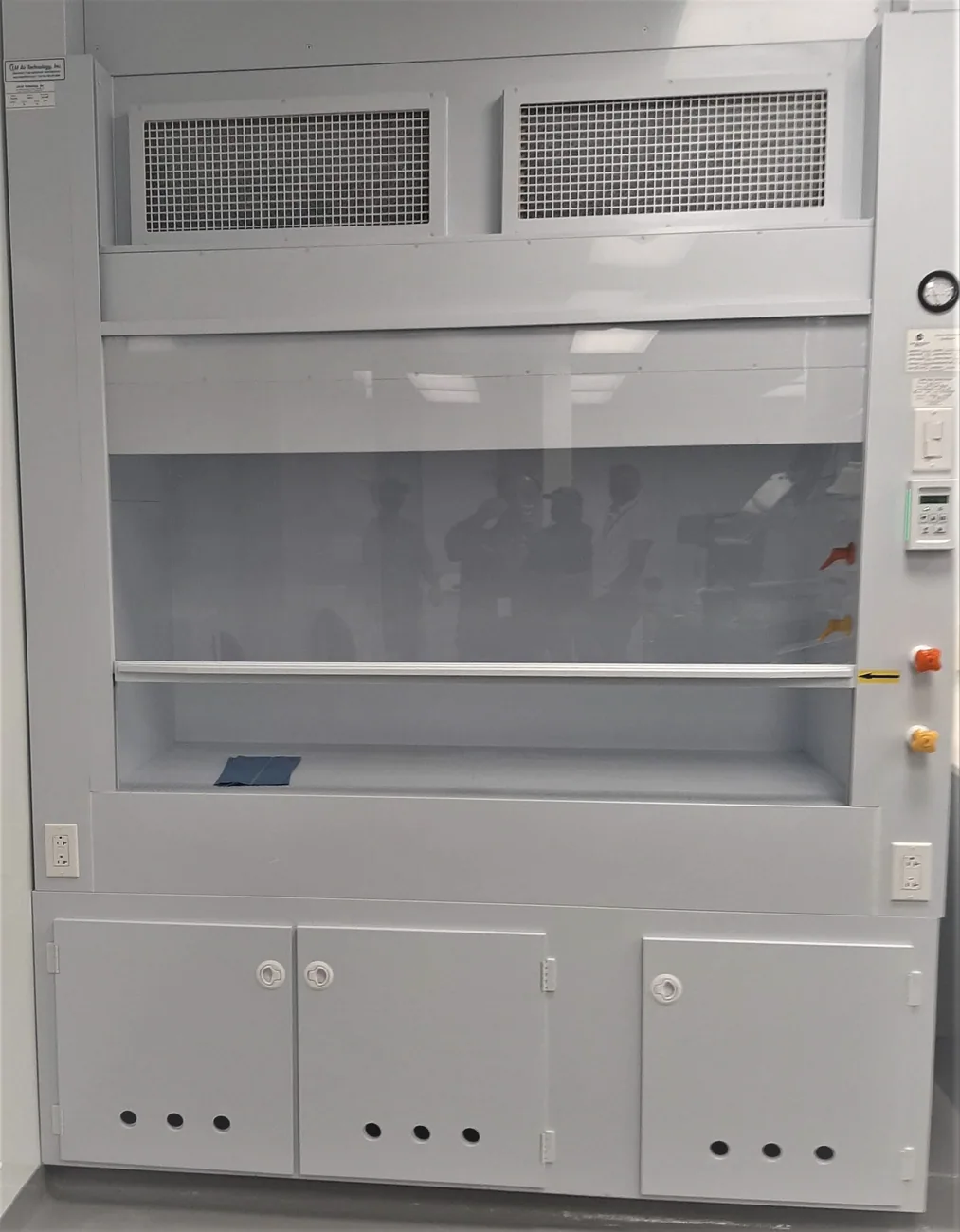
Painted steel laboratory casework installation

LAB PLANNING RESOURCE

Laboratory Casework Material Comparison Guide

Compare six common casework materials and countertop options by performance, maintenance, typical cost and best use.

Laboratory casework is commonly made from painted steel, stainless steel, wood, plastic laminate, phenolic resin and polypropylene. Painted steel is a strong all-round choice for many labs, stainless steel suits sterile and wash-down areas, wood and laminate suit teaching and general-purpose spaces, phenolic resin suits wet and humid areas, and polypropylene is often specified for strong acids and metal-free trace-metal labs. This guide compares these materials and summarizes countertop choices to help you plan a laboratory.

MADE IN AMERICAThese casework materials are made in the USA and installed by Lab Setup America and its partners across all 50 states.

SIDE BY SIDE

Quick comparison chart

CriteriaPainted SteelStainless SteelWoodPlastic LaminatePhenolic ResinPolypropylene
General chemical resistanceVery goodVery goodGoodNot stated in source sheetVery goodExcellent
Strong acids & corrosive fumesLimitedGoodLimitedNot stated in source sheetGoodExcellent
Moisture & humidityGoodExcellentLimitedNot stated in source sheetExcellentExcellent
Heat resistanceVery goodExcellentGoodNot stated in source sheetVery goodLimited
Strength & load capacityExcellentExcellentVery goodNot stated in source sheetVery goodGood
Impact & dent resistanceGoodVery goodVery goodNot stated in source sheetExcellentVery good
Cleanability & hygieneVery goodExcellentGoodNot stated in source sheetExcellentVery good
Sterilization / wash-downGoodExcellentLimitedNot stated in source sheetVery goodVery good
Metal-free constructionLimitedLimitedGoodNot stated in source sheetVery goodExcellent
Design & color optionsVery goodLimitedExcellentLaminate color per finish scheduleVery goodGood
ConstructionFormed steel with baked polyurethane/epoxy powder-coat finishType 304 or 316 stainless steel, No. 4 brushed finishHardwood veneers (maple, oak, cherry, ash, beech, bamboo) with chemical-resistant finishHigh-pressure laminate on industrial particleboardSolid phenolic resin panels — same material throughout100% polypropylene, seam-welded; doors, drawers, hinges and screws all polypropylene
Typical relative cost*$$$$$$$$ – $$$Typically most economical$$$$$$
Best forGeneral research, QA/QC, analytical, healthcare and university labsCleanrooms, vivariums, pharma/GMP, food, hospital and sterile areasTeaching labs, science classrooms, research spaces where appearance mattersGeneral, technology, laboratory, ADA, art, music, shop and library caseworkWet labs, sink and glass-wash areas, humid rooms, clinical labsAcid digestion, trace metal/ICP-MS, semiconductor, plating and corrosive labs
Avoid forConstant wet areas and strong acid fumesHeavy chloride or hydrochloric acid exposure (use 316 or another material)Constant water exposure and heavy acid usePerformance limits not stated in source sheetVery high heat and open flamesHigh heat sources and very heavy point loads
Performance standardSEFA 8M (metal)SEFA 8M (metal)SEFA 8W (wood)SEFA 8SEFA 8 (phenolic) — confirm per projectSEFA 8P (polypropylene)

*Typical relative cost for comparable cabinets; actual pricing depends on configuration, quantity and options. Ratings are general guidance. The supplied laminate specifications do not state several comparative performance ratings. Confirm suitability against your lab’s chemical list with our team.

START WITH YOUR WORK

Which casework is right for my lab?

General research, QA/QC or analytical labPainted Steel casework
Cleanroom, pharma/GMP, vivarium or food labStainless Steel casework
School science classroom or teaching labWood casework
Wet lab, sink area or high-humidity roomPhenolic Resin casework
Strong acids, acid digestion or trace metal analysisPolypropylene casework
Tight budget with heavy daily usePainted Steel casework
General-purpose, technology or ADA casework with a tight budgetPlastic Laminate casework (confirm lab requirements)
Mixed lab with several hazard zonesCombine materials — for example, steel casework with polypropylene under acid hoods and phenolic at sinks

MATERIAL DETAILS

Compare strengths and trade-offs

Painted Steel laboratory casework

Painted steel casework is formed steel cabinetry finished with a baked, chemical-resistant powder coat. It is the most widely specified laboratory casework in the United States.

Advantages

  • High strength and load capacity for instruments and heavy storage
  • Durable powder-coat finish resists common reagents, solvents and disinfectants
  • Precision-made components are uniform and interchangeable
  • Door and drawer styles can be changed in the field with simple hand tools
  • Full-extension drawers and a wide choice of colors
  • Flammable-storage versions are available for NFPA 30 compliance

Things to consider

  • Finish can be damaged by strong acid fumes or constant moisture over time
  • Scratches through the coating can expose bare steel

Best for: Research and development, analytical and QA/QC, hospital and clinical, university and government labs.

Explore painted steel laboratory casework

Stainless Steel laboratory casework

Stainless steel casework is fabricated from Type 304 or Type 316 stainless steel with a brushed No. 4 finish. It is the material of choice where hygiene, sterilization and wash-down matter most.

Advantages

  • Non-porous, hygienic surface that withstands repeated disinfection and steam
  • Excellent moisture, heat and corrosion resistance
  • Type 316 adds resistance to chlorides and harsher chemicals
  • Integral stainless countertops and welded sinks for seamless, cleanable surfaces
  • Same interchangeable, field-convertible components as steel casework

Things to consider

  • Highest initial cost of the five materials
  • Some acids and chlorides can attack Type 304
  • Limited color and design options

Best for: Cleanrooms, pharmaceutical and GMP areas, vivariums, food and beverage labs, hospital sterile processing, cell and gene therapy.

Explore stainless steel laboratory casework

Wood laboratory casework

Wood laboratory casework is built from hardwood veneers — such as maple, oak, cherry, ash, steamed beech or bamboo — with a chemical-resistant factory finish.

Advantages

  • Warm, premium appearance with vertical grain-matched veneers
  • Chemical-resistant finishes applied in a controlled clean environment
  • Can exceed SEFA performance standards for chemical resistance
  • Many species, stains and door styles; FSC-certified wood available
  • Can contribute to LEED points

Things to consider

  • Not suited to constant water exposure or wet areas
  • Lower resistance to strong acids than steel, phenolic or polypropylene

Best for: K-12 and university science classrooms, teaching labs, instructor desks, research spaces and labs next to offices.

Explore wood laboratory casework

Plastic Laminate laboratory casework

Plastic laminate casework uses high-pressure laminate on an industrial particleboard body. The supplied comparison sheet describes it as a typically economical option with a wide range of laminate colors and black PVC edges.

Advantages

  • Typically the most economical casework option in the supplied comparison
  • Laminate color can be selected to match the finish schedule
  • Rated to SEFA 8
  • Available for general, technology, laboratory, ADA, art, music, shop and library applications

Things to consider

  • The comparison source does not provide chemical, moisture, heat or load ratings; confirm suitability with the manufacturer
  • The source sheet has a conflicting tall-case construction description, which should be confirmed before quoting

Best for: Projects that need an economical casework option and a coordinated laminate color, after confirming the lab’s chemical and moisture requirements.

Explore plastic laminate laboratory casework

Phenolic Resin laboratory casework

Phenolic casework is built from solid phenolic resin panels. Because it has no metal or wood core, it will not rust, swell or delaminate.

Advantages

  • Excellent moisture resistance — ideal for wet and humid areas
  • Resists many acids and solvents
  • Impact and rust resistant; does not absorb odors
  • Virtually maintenance free for the life of the product
  • Available in a broad range of colors

Things to consider

  • Higher cost than painted steel
  • Not recommended for very high heat or open flames

Best for: Wet chemistry labs, sink and glass-wash areas, clinical and healthcare labs, environmental and marine labs.

Explore phenolic resin laboratory casework

Polypropylene laboratory casework

Polypropylene casework is fabricated from 100% polypropylene sheet with seam-welded construction. Every component can be polypropylene, so the casework is completely metal-free.

Advantages

  • Outstanding resistance to strong acids, bases and corrosive fumes
  • Metal-free construction prevents contamination in trace metal labs
  • Will not rust, corrode or swell
  • Thick 3/8-inch and 1/2-inch welded panels
  • Flame-retardant polypropylene available (FM 4910 / UL 94 V-0)
  • Integral polypropylene countertops, sinks and cup sinks; clear PVC, polycarbonate or acrylic doors available

Things to consider

  • Lower heat resistance — keep away from hot plates and burners
  • Lower load capacity than steel for very heavy equipment

Best for: Acid digestion, trace metal and ICP-MS, semiconductor and microelectronics, plating and etching, water treatment and chemical analysis labs.

Explore polypropylene laboratory casework

WORK SURFACES

Choose a laboratory countertop for the work.

Use this quick guide to compare epoxy, phenolic and stainless steel surfaces. Chemical-resistance ratings are lab spot tests, not a guarantee for every concentration or exposure time; confirm suitability for your specific chemicals before ordering.

Epoxy Resin

Heaviest chemical use, integral epoxy sinks, drain troughs or marine-edge spill containment.

Explore epoxy resin

Stainless Steel

Heat, washing, sterile or food work where hygiene comes first. Type 316 is an option for harsher conditions.

Explore stainless steel

COMMON QUESTIONS

Laboratory casework material FAQs

What is the best material for laboratory casework?+

There is no single best material. Painted steel is the best all-round choice for most labs; stainless steel for sterile and wash-down areas; wood for teaching labs; phenolic resin for wet and humid areas; and polypropylene for strong acids and metal-free labs.

Which lab casework is most chemical resistant?+

Polypropylene offers the highest resistance to strong acids, bases and corrosive fumes. Phenolic resin and stainless steel also resist many chemicals. Always confirm against your specific chemical list.

What casework is best for wet labs?+

Phenolic resin, polypropylene and stainless steel casework all perform well in wet and humid areas because they will not rust, swell or delaminate.

Is painted steel or wood casework better?+

Painted steel offers higher load capacity and better moisture resistance at a moderate cost. Wood offers a warmer appearance and is common in science classrooms and teaching labs.

Why choose polypropylene casework for trace metal analysis?+

Polypropylene casework can be built 100% metal-free — including hinges, screws and handles — which prevents metal contamination of samples.

Can different casework materials be used in the same lab?+

Yes. Many labs combine materials — for example, painted steel casework for general work, polypropylene under acid fume hoods, and phenolic or stainless steel at sinks.

Is your laboratory casework made in the USA?+

Yes. Our painted steel, stainless steel, wood, phenolic and polypropylene laboratory casework is made in the USA and installed by Lab Setup America and our partners nationwide.

NEED HELP COMPARING MATERIALS?

Plan casework around your work, room and chemical list.

Call 801-435-3167
Request a Quote

Last updated: October 2026